
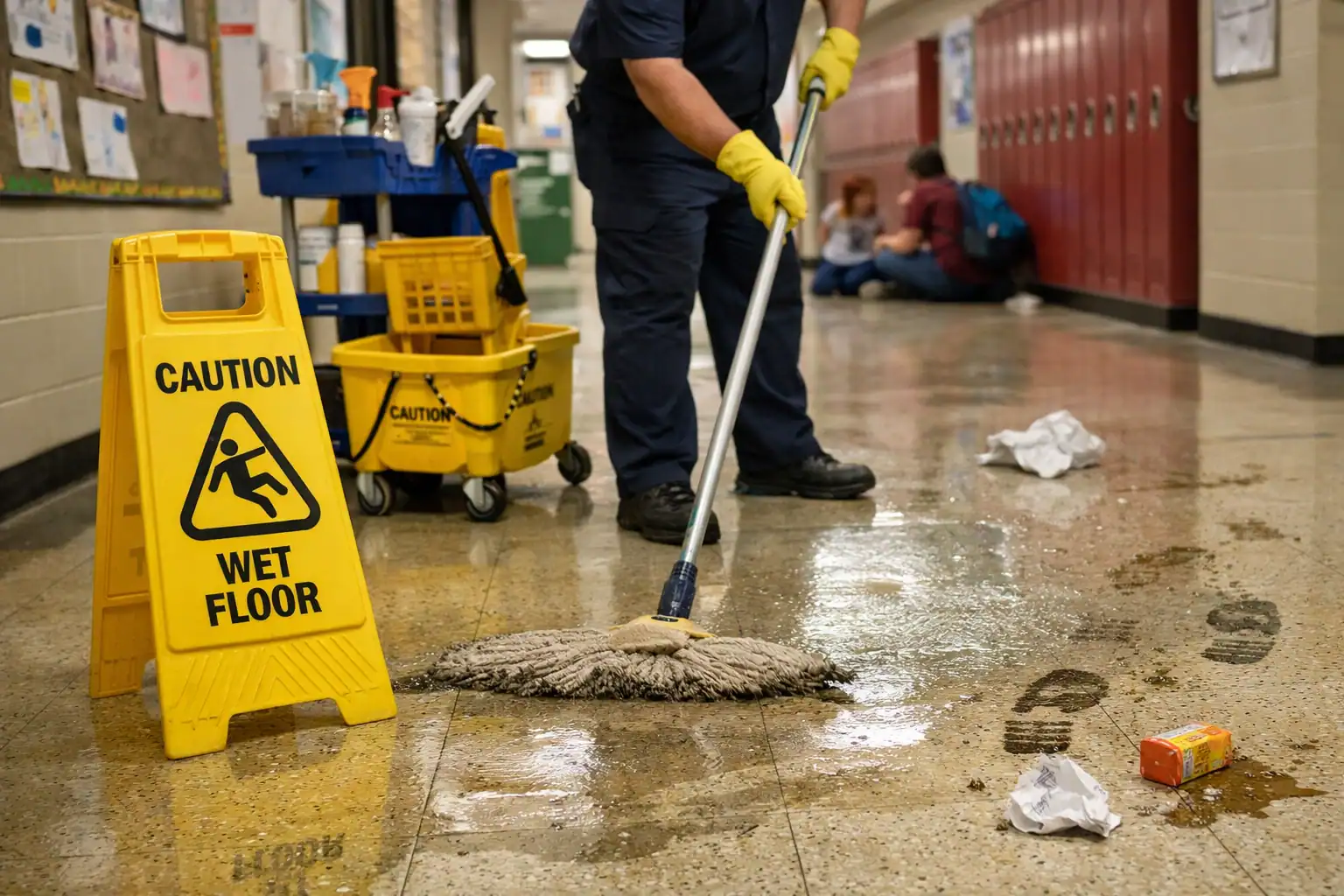
Schools are very busy places. Kids run through the halls each day. Teachers move between rooms all the time. Visitors come and go too. All of this makes floors dirty very fast. Clean floors keep students safe and healthy. They also help kids focus better in class. But keeping school floors clean is hard work. Schools are nothing like offices or stores. The challenges are far bigger and the stakes are much higher.
10 Floor Cleaning Challenges in Schools & Educational Buildings
Keeping clean and safe floors in schools is much harder than most people think. Schools face heavy foot traffic each and every day. They have many different floor types that each need special care. Cleaning time is always short and budgets are always tight.
Understanding these challenges helps schools build smarter cleaning plans that protect students, keep staff safe, and maintain healthy spaces all year long. Partnering with a professional school cleaning service can make this easier by providing expert care, modern tools, and trained staff who know how to keep every floor in top condition.
1. High Foot Traffic & Wear and Tear
Hundreds of students walk through school halls every single day. That puts enormous pressure on floors. School floors take a far harder beating than floors in almost any other type of building.
Here is what constant foot traffic does to school floors over time:
- Dirt gets pushed deep into flooring very quickly each and every day
- Floor surfaces scratch and become dull far faster than in other buildings
- Protective coatings wear away within just a few short months of being applied
- Floors can look dirty again just hours after a fresh cleaning is completed
- High-traffic spots like hallways and stairwells always wear down the fastest
This constant wear and tear means school floors need more care and more frequent cleaning than most other buildings. A cleaning plan designed for an office simply will not work for a school.
2. Diverse Flooring Types
Most schools have many different types of floors throughout the building. Each type needs its own specific cleaning method and products. Using the wrong cleaner on the wrong surface can cause serious and costly damage very fast.
Here are the most common floor types found inside school buildings:
- Gyms often have polished hardwood floors that need very gentle and careful cleaning methods
- Hallways usually have vinyl tile that needs regular stripping and waxing to stay in good shape
- Classrooms may have carpet that requires regular vacuuming and scheduled deep cleaning sessions
- Labs and cafeterias often have concrete or ceramic tile that needs strong disinfecting products
Using the wrong product on the wrong floor can cause real damage. Fixing that damage costs a lot of money. Cleaning staff must know each floor surface well and always use the correct tools and products every single time they clean.
3. Limited Cleaning Windows
Schools cannot be cleaned properly while students are still inside the building. That leaves very little time to get all the work done well. This is one of the biggest floor cleaning challenges that school cleaning teams face every single day.
Here is why limited cleaning windows cause so many real problems for schools:
- Most cleaning happens after school ends, on weekends, or very early each morning
- These short time windows are often not long enough for a thorough and proper deep clean
- Quick spot cleaning done during the school day is simply not enough to keep floors truly clean
- Rushed cleaning means that some areas get completely missed or skipped over each time
- Working too quickly leads to small mistakes that grow into much bigger problems over time
Over time, rushed or skipped cleaning sessions lead to far larger and more serious problems. Those problems always become much harder and far more expensive to properly fix later on.
4. Budget Constraints
School budgets are very tight all year long. Cleaning is often one of the very first things to get cut when money becomes short. But cutting the cleaning budget almost always creates far bigger and much more expensive problems somewhere down the road.
Here is what happens when schools reduce their cleaning budget too much:
- Cheaper cleaning products often do not clean school floors nearly as well as better quality ones
- Old and worn equipment breaks down far more often and slows the whole cleaning team right down
- Smaller cleaning teams simply mean that far less work gets done in the same amount of time
- Skipping regular deep cleans allows dangerous dirt and harmful germs to build up quickly inside the school
- Cutting corners on cleaning now will always result in much bigger and costlier problems to deal with later
Floors that are not properly maintained wear out much faster than they should. Sick students and staff also lead to more people missing school days each week. Saving money on cleaning today can end up costing a school far more money in the long run.
5. Health & Safety Compliance
Schools must carefully follow strict rules to keep every single person inside the building safe at all times. This includes exactly how floors are cleaned and which specific products are used to clean them. Failing to follow these important rules can bring very serious and costly trouble to any school.

Here are the key health and safety compliance steps that every school must always follow:
- Wet floors must always be clearly marked with proper signs so that nobody slips and falls
- All cleaning chemicals used must be completely safe for spaces where children spend their time
- Good ventilation is very important whenever any cleaning products are being used inside a building
- Schools can face very serious legal trouble if the correct health and safety rules are not properly followed
- Every member of the cleaning staff must be fully trained on all safety rules before starting work
Finding products that are both truly safe and genuinely effective is a real daily challenge for most schools. Proper and regular training also ensures that all health and safety compliance rules are followed correctly each and every time cleaning takes place.
6. Weather-Related Challenges
Bad weather makes floor cleaning much harder for everybody involved. Rain, snow, and mud get tracked inside with every single student who comes through the front door. This becomes a constant and exhausting daily battle during the cold and wet months of the year.
Here is exactly what bad weather does to school floors on a daily basis:
- Wet floors near building entrances become dangerously slippery for students walking through very quickly
- Muddy footprints spread rapidly through hallways and all shared spaces throughout the school building
- Damp floors always take much longer to dry out completely and remain unsafe for a very long time
- Strong wind constantly blows outside dust and debris into the building all throughout the school day
- Building entryways require constant cleaning and careful attention during periods of heavy rain and storms
Kids do not always pay attention to where they are walking. A slippery wet floor in a crowded hallway can easily cause a very serious injury. Fast action and smart entrance mat setups help greatly reduce this dangerous risk each and every day.
7. Stain & Spill Management
Schools are filled with all kinds of things that can badly stain floors. Spills happen constantly and in every single area of the building throughout the day. Any spill that is left sitting for too long very quickly becomes a much harder and more stubborn problem to properly clean and remove.
Here are the most common stain and spill problems that schools have to deal with every day:
- Art classes bring paint, glue, and markers that can permanently damage floor surfaces very fast
- Cafeterias deal with messy food and sticky sugary drink spills every day that attract harmful germs and bugs
- Science labs regularly work with chemicals that can permanently stain or seriously damage certain types of floors
- Gum is widely known as one of the very hardest floor problems to fully remove once it has completely hardened
- Hallways and all shared areas constantly collect tracked-in dirt and all kinds of mess throughout every school day
The faster any spill gets cleaned up, the much easier it becomes to remove it fully and completely. But inside a very busy school, spills often sit unattended for far too long before someone can get to them. Having a clear and practiced plan for quickly reporting and properly handling spills makes a truly significant difference every day.
8. Sustainability & Environmental Concerns
Schools are now being strongly asked to clean their buildings in ways that are much better for the environment around us. Parents and local communities want greener and far safer cleaning options for their children. This creates a growing and very real layer of extra difficulty for school cleaning teams trying to do their jobs well.
Here is exactly why balancing sustainability and environmental concerns presents such a tough and ongoing challenge:
- Harsh cleaning chemicals can seriously damage the indoor air quality inside school buildings every day
- Children breathe that same indoor air for six or more hours during every single school day of the week
- Some eco-friendly cleaning products simply do not clean floors as effectively as stronger chemical options available
- Green and environmentally friendly cleaning products often cost significantly more than regular everyday cleaning supplies
- Cleaning staff may require extra hands-on training to learn how to correctly use newer sustainable cleaning methods
Schools need products that are safe, effective, affordable, and good for the environment all at the very same time. Finding all four of these important qualities together in one product is never a simple or easy task. But it is becoming more critically important every year as more communities push hard for healthier and greener school environments for all children.
9. Equipment & Technology Limitations
Many schools across the country are still relying on very old cleaning equipment every single day. Outdated machines create real and serious ongoing problems for cleaning teams on a regular and recurring basis. Having the right tools available and in proper working condition makes an enormous difference in how effectively school floors get cleaned each night.
Here is what regularly happens when schools continue to depend on old or outdated cleaning equipment:
- Old cleaning machines often do not clean floors nearly as well as newer and more modern equipment can
- They tend to break down far more frequently and significantly slow down the entire cleaning team each time
- They typically use much more water and far more cleaning chemicals than newer efficient machines actually require
- Staff members may not know the correct way to operate newer equipment without proper and thorough hands-on training
- Repairing old and failing machines can ultimately cost just as much money as purchasing brand new replacement equipment
Having good equipment alone is never fully enough to completely solve all the cleaning problems a school faces. Training always matters every bit as much as simply having the right tools available to use. When staff truly know how to use the right tools in the right way, cleaning always becomes faster, less costly, and far more effective across the entire school building.
10. Security & Liability Concerns
After-hours cleaning always brings a very unique and genuinely tricky set of problems along with it each time. Empty and quiet school buildings at night raise very real and serious safety and security questions that must always be carefully thought through and properly answered. Schools need strong, clear, and well-practiced plans in place to manage all of these important risks every single time cleaning work takes place after hours.
Here is exactly why security and liability concerns are so critically important for every school to carefully address and plan for:
- Building access must always be very carefully tracked and properly managed during all after-hours cleaning periods
- Bringing in outside cleaning companies introduces extra security concerns that schools must plan around very carefully indeed
- Any accidents that occur during after-hours cleaning sessions can lead to very serious legal liability issues for the school
- Wet or poorly marked floors left overnight can directly and easily cause student injuries the very next school morning
- Incomplete or missing cleaning records make it extremely difficult to legally prove that proper cleaning work was ever carried out
Schools absolutely need clear written procedures and complete documentation carefully kept for every single cleaning session without any exceptions. Having the correct and adequate insurance coverage also helps properly protect the school in the event that anything goes wrong either during or after all cleaning work is fully completed.
Conclusion
Floor cleaning in schools is a real and ongoing challenge every single day. Tight budgets, busy schedules, and strict safety rules all make the job much harder to do well. But a good and solid plan always makes a real and lasting difference. Schools that stay proactive spend less money and get far better results over time. Clean floors mean safer and healthier spaces where every student can learn and grow.