
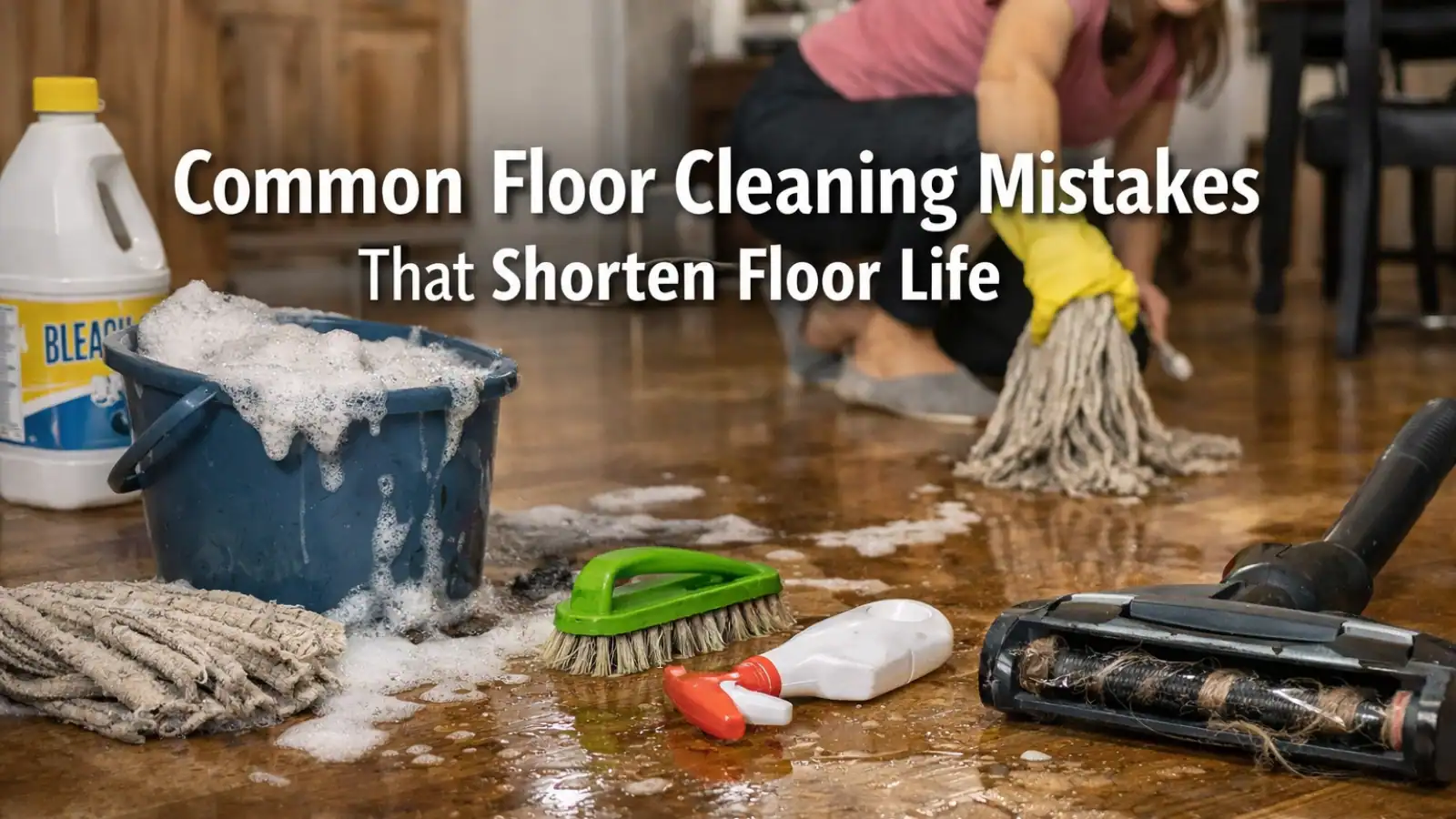
Many property owners invest heavily in premium flooring but are less concerned about cleaning and preparation. Indeed, floor cleaning is essential to maintain a healthy, safe, and secure environment, but using the wrong techniques or products can cause long-term damage. The problem is that maintaining cleaning habits, which seem primarily helpful, can be destructive to specific floor chemistries.
It’s incredibly frustrating to watch an expensive floor stone lose its shine just because of a “highly rated” cleaner that wasn’t actually right for the floor. Using suitable cleaning chemicals can damage surfaces and make them look old too fast. Let’s discuss common floor cleaning mistakes that shorten your floor life, and exact solutions to overcome it.
7 Most Common Floor Cleaning Mistakes
Cleaning your floor is common, but several cleaning mistakes can cause permanent structural damage on your expensive floors. See the most common types of cleaning mistakes happened which conducting cleaning preparation.
1. Using Too Much Water During Cleaning
Excessive moisture is the silent killer of modern flooring. Ensure proper floor cleaning maintenance requires adequate water and liquids. When water leaks into the joints or layers, the core material swells, warps, or laminarizes. Moreover, jamming water can result in mold growth beneath the surface, which is nearly impossible to treat without tearing up the entire floor.
Floor Saturation Risks: While floor tiles are water-resistant, excessive water can cause grout to deteriorate and the adhesive bond to detach, leading to loosened tiles.
Weaken Tiles: Extended moisture destroys the adhesive (thin-set) bond below the tiles. This is causing tiles to loosen, which may produce a hollow sound when you walk.
Staining and Residue: Floor dust leftovers and sticky marks remained uncleaned if too much water was used with cleaning products. This means having no knowledge of mixing ratios between substances and water, resulting in a marked dusty floor.
The Spill Protocol: Use a dry cloth to immediately soak up overflows. Don’t use a wet rag to wipe them; otherwise, mess will spread.
2. Using the Wrong Cleaning Products
Using the wrong cleaning material can create scratches on your floor instead shineliness. It can cause permanent damage to your floor. Again, excessive moisture is a silent killer of modern flooring, especially for structures like floors, tiles, and grouts.
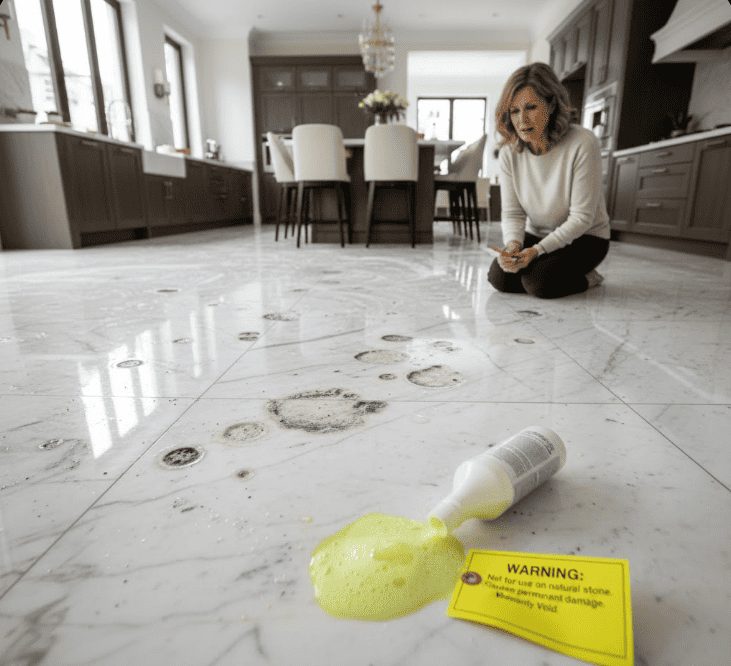
Chemical Sensitivity: Natural stones, such as marble or limestone, can effect from chemical mixing with acids, which can cause permanent dark spots like etching.
Residue Buildup: High-strength cleaners leave a film like air-borne dust. Once the dust layer in the floor has hardened, it needs a specialized floor care solution to remove.
Manufacturer Guidelines: Check floor cleaning guidelines from Manufacture’s Association to ensure your floor cleaner doesn’t cancel warranty.
The pH Factor: Know the standard mixture of pH-neutral cleaners (standard 7.0) to ensure your floor cleaning meets requirements
3. Ignoring Floor-Specific Cleaning Requirements
Cleaning your ceramic floor tiles like wood is the fastest way to damage your floor. Significantly, each material has a specific set of tiny holes and severity level that indicates how the substances should be handled.
For example, tiles joining lines in the floor are highly penetrable and require sealing and oxygenated cleaners, whereas wood needs breathable finishes. Ignoring these shades on your floor means you aren’t just cleaning; you’re actively ignoring the surface.
Water Absorbent: A highly dense floor (ceramic tile) absorbs liquids instantly, requires pre-sealing and specialized non-marking agents.
Finish Hardness: An ultra-shining or reflecting coating focus scratches instantly. Thus, you need an organic anti-foaming agent to maintain mirror-like floor brightness.
Structural Strength: Use of oily cleaners causes darkening and disintegration of the tiles’ joining sides.
The False Belief in a Single Product: A curated collection of cleaning tools and materials has distinguishing properties. It needs a separate designated area with proper marking to ensure matching floor materials.
4. Using Abrasive Tools and Equipment
Experts recommend using relevant tools and equipment for your floor cleaning. Therefore, using steel wool, or stiff-bristle brushes, or even using the wrong vacuum attachment, like a tough floor, or using sandpaper. It’s interesting to note that micro-scratches might not be visible at first sight, but later they will appear to you quickly.
This will flatten your shiny floor and create a “pocket” where dirt will be permanently trapped. When you start vacuuming with a beater bar, your floor area might be scratched, causing a deep hole in your floor tiles.
Mechanical Damage: Beater bar designs are for soft carpet cleaning; don’t use them on hard floors. Which can cause circular “burn” marks or deep scratches.
Scrub Pad Grades: Avoid green or brown scrubbing pads on weak surfaces. Use white or red pads for light focusing only.
Debris Drag: Tiny rocks in a dirty mop can scratch your floor. Always sweep or vacuum well before you mop.
Furniture Friction: Use a pad on all of your furniture legs to prevent deep scratches when chairs or tables are moved.
5. Skipping Regular Maintenance Cleaning
Grit and sand damage floors affect more than a single shed because they build up every day. This dirt and sand gradually increase as tiny pieces of sandpaper. Whenever you walk on the dusty floor, grinding particles into the surface, scratching your floor tiles.
Therefore, don’t skip swiping for a day that increases dust levels and causes long-term damage. Regular floor cleaning maintenance can remove abrasive particles before they scratch the surface.
The Sandpaper Effect: Regular walking on a dusty floor feels like sandpaper.
Frequency Matters: Clean your high-traffic areas like entry zones or kitchens. Regular swiping or removing dust removes abrasive particulates.
Matting Strategy: Place your high-quality floor mats at every entrance to prevent 80% of outdoor debris from hitting your main building.
Preventative Buffing: Periodic light polishing can help smooth micro-scratches before they deepen.
6. Overusing Steam Cleaners
Steam cleaners are marketed as “sanitary” and “chemical-free,” but it has significant risks when cleaning modern floors. This machine forces pressurized steam into the tiny gaps between planks or tiles. If the edge of your ceramic tiles has no space for wiping out steam, it can cause major damage.
Thermal Shock: Heavy pressure on the steam heat can crack your natural stone or tiles, or cause them to crumble on the surface of the floor.
Vapor Pressure: Steam not only reaches the surface of the floor; its pressure often pushes into the deep floor, causing long-term rot.
Warranty Cancellation: The major floor manufacturer declares on the warranty paper that the use of a steam mop will cancel your product warranty.
Adhesive Delamination: Use of high temperatures during steaming can liquidize glue used in LVP (Luxury Vinyl Plank) and laminate.
7. Failing to Protect Floors During Cleaning
Most of the time, you’re very serious about cleaning instead of concentrating on other issues. Suppose your staff removes furniture or heavy home decor without leaving a “caution” sign. After cleaning, the floor area was slightly softened, but you placed your furniture back there, causing permanent damage.
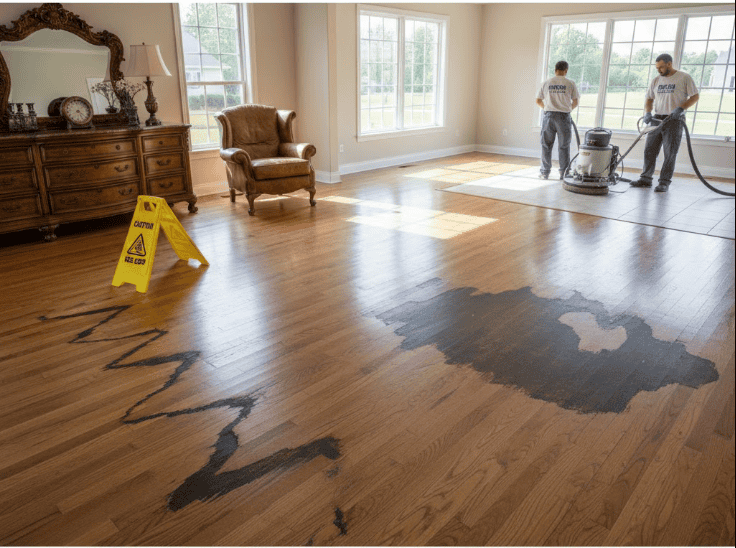
Furniture Hazards: Never drag items; use sliders or lift your furniture to avoid “tracking” marks across the floors.
Chemical Cross-Contamination: While cleaning one corner of the floor, the other side kept the solution for a long time. This can cause permanent staining or bleaching on your floor.
The Sunlight Factor: UV rays can change your floor color over time. Therefore, define a period of time, while the day prevents evaporation and stripes.
Professional Intervention: Know exactly when your issue is beyond a “mop and bucket” fix. Only a professional deep cleaning can remove rust from tile floor with essential tools that you may be unable to arrange.
Conclusion
Floor care focuses on your decency, hygiene, and aesthetics; it recognizes your caring attitude for a healthy, clean living environment. Moreover, a proper floor directly manifests your intention for a hygienic standard that attracts dwellers, visitors, and your staff. To ensure proper floor cleaning, you should know the utilization of the right tools, moisture levels, and material needs.
A commercial floor care solution has cleaning experts who can design a checklist and arrange cleaning substances. Professional cleaning experts at Clean Care Services ensure proper water usage, precise mixing of cleaning solutions, and regular maintenance. These best practices help reduce the risk of floor damage and protect your floors for long-lasting durability.
FAQs
What is the Most Common Floor Cleaning Mistake??
Ans: While cleaning your floor, if you use more water than requirement of your floor cleaning needs.
Can the Wrong Cleaning Product Damage Floors?
Absolutely, you should mix your cleaning product according to the type of floor, structure, and color. Failing to check exact matches product can cause long-term damage to your floor.
Are Steam Cleaners Safe for All Floor Types?
It depends on your floor setting and requirements. Stem cleaners are ideal for looked tile or stone floors. But high-pressure heat and moisture can cause permanent damage to your floors. Only professional cleaners can fix it properly, taking into account complexities and needs.
How Often Should Floors Be Cleaned to Prevent Damage?
You should identify which areas people move fast, and where people visit less. According to the number of high or low people visiting the area, you can plan daily/weekly/bi-weekly.
How Can I Extend the Lifespan of My Floors?
Measure proactive maintenance routine, sweep or vacuum daily to remove grit, and mop with pH-neutral cleaners. Also, use a furniture pad to prevent scratches. Most importantly, protect your highly visited areas, and apply your standard cleaning maintenance accordingly.