
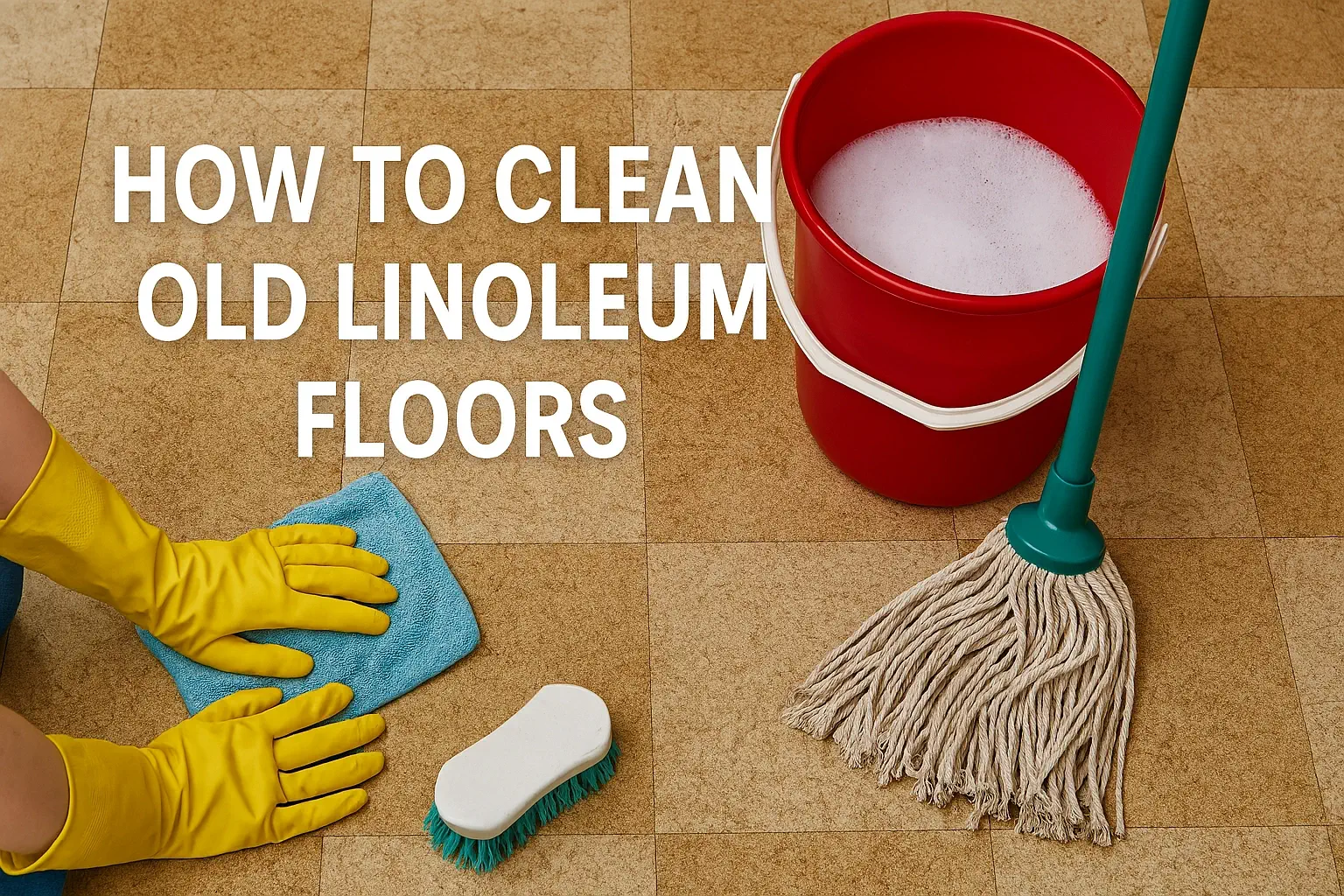
Linoleum floors may be present in older homes, but they have stood the test of time. But as they grow old, challenges emerge. There may be dullness, stains, and a buildup of grime that regular cleaning might not fix. Unlike modern vinyl, old linoleum needs gentle cleaning and the right methods to keep it looking good without causing damage.
Today, we will show you effective steps to clean your old linoleum floors, from everyday maintenance to deep cleaning and stain removal, so they keep looking new.
Why You Should Clean Linoleum Floors
Linoleum floors are durable, stylish, and eco-friendly. But they need regular cleaning to look good and last longer. Ignoring your linoleum floors can lead to stubborn stains, dullness, and even permanent damage.
Read More Tips: Remove rust from tile floor
Regular cleaning prevents the buildup of dirt and grime that can dull the floor’s finish and make it look worn. Removing abrasive particles like dirt and sand also helps prevent scratches and extends the life of the linoleum. It also reduces the need for more maintenance, intensive cleaning, or restoration efforts later on. To keep these floors in shape, they should be cleaned at least once every week.
Preparing to Clean Old Linoleum Floors
Before starting to clean your old linoleum floors, there are a few preparations you should take, depending on the type of cleaning you want to do. They are:
- Sweep or vacuum the floor thoroughly to remove any loose dirt, dust, or debris.
- For regular and simple cleaning, take a solution of warm water and a few drops of dish soap.
- For stubborn dirt or yellowing, you can add a cup of white vinegar to a gallon of warm water or create a paste of baking soda and water for specific stains. Lemon juice can also be useful.
- Keep a commercial linoleum floor cleaner specifically designed for this type of flooring.
- Keep basic cleaning items like a broom, vacuum cleaner, mop, scrub brush, clothes or towels, and dish soap.
Step-by-Step Guide to Cleaning Old Linoleum Floors
A complete and effective step-by-step guide on how you can clean old linoleum floors is given below:
Step 1 – Prepare the Floor
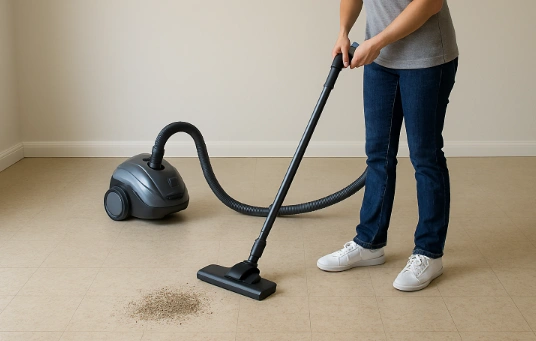
At first, prepare the floor so that you can clean it easily without any problems. At first, prepare the floor by removing any furniture or objects that might be in the way. Thoroughly sweep or vacuum to remove loose dirt and debris. Also, you can damp mop the floor in sections. Excessive water can damage linoleum, so avoid soaking the floor.
Step 2 – Prepare Cleaning Solution
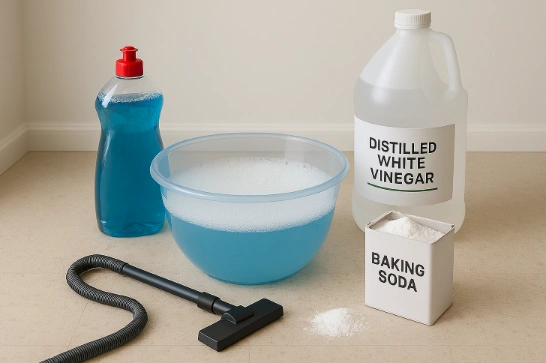
To clean your linoleum floors, there are different types of materials you can use, but avoid harsh chemicals that can damage the linoleum. Use a mixture of warm water and a few drops of mild dish soap, as they are usually sufficient. But for a deeper clean, you can add a cup of vinegar to a gallon of warm water. Baking soda can also be used to create a paste for stubborn stains.
Step 3 – Dampen your Cleaning Tool
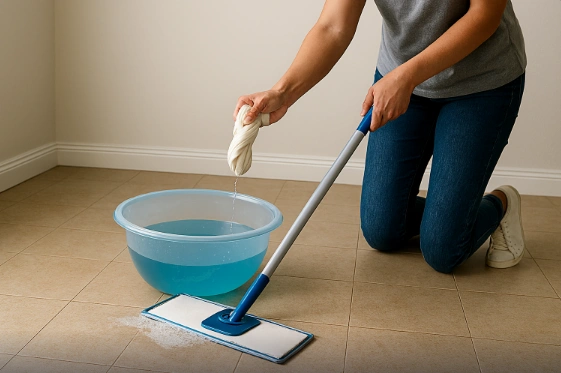
Dip your mop or cleaning cloth into the solution, then wring it out thoroughly. The tool should be damp, not dripping wet. Overly wet cleaning can damage linoleum. Mix your cleaning solution with warm water and a mild detergent, and apply it to the floor in small sections.
Step 4 – Mop the Floor
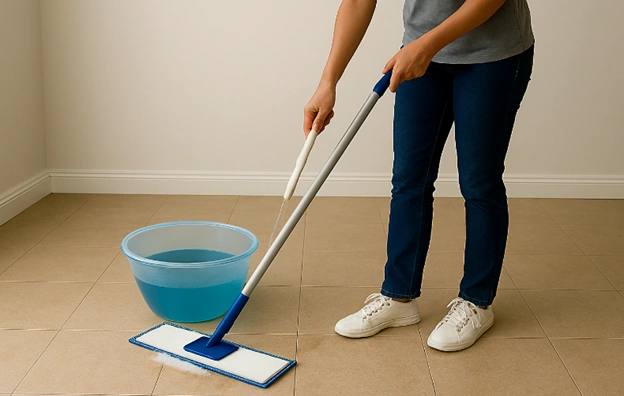
At first, divide the room into sections that are 6′ x 6′ in size. Then mop each section. As you mop each section, dip the mop back in the bucket, wring it dry, then start over in the next section to avoid germs from previous mopping. Finish mopping the entire floor like this. Lastly, dump the bucket of cleaning solution, and wash both the bucket and the mop with clean water.
Step 5 – Rinse the Floor
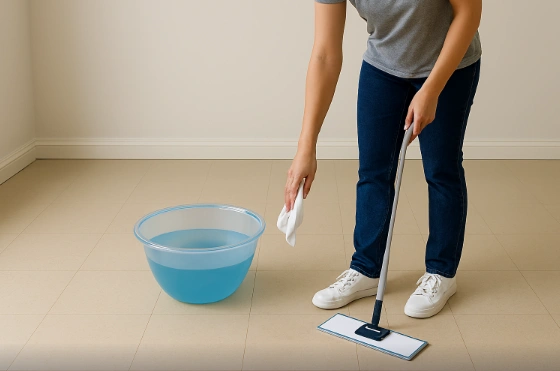
After cleaning the bucket and the mop, fill the empty bucket with water. Hot water is preferred for effective rinsing. Then mop the linoleum floor again in sections. This is needed to remove any soap residue that may be left on the floor from mopping.
Step 6 – Dry the Floor
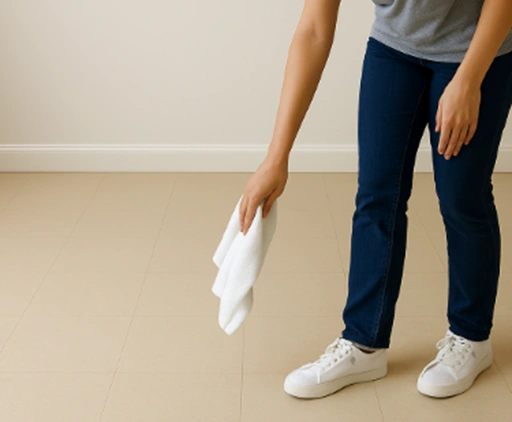
You need to get rid of any excess moisture that remains after cleaning the floors. Excess water can damage linoleum floors. Use old washcloths or towels and pat down the floor’s surface to dry it. The clothes should quickly absorb any excess moisture.
Step 7- Remove Stubborn Stains
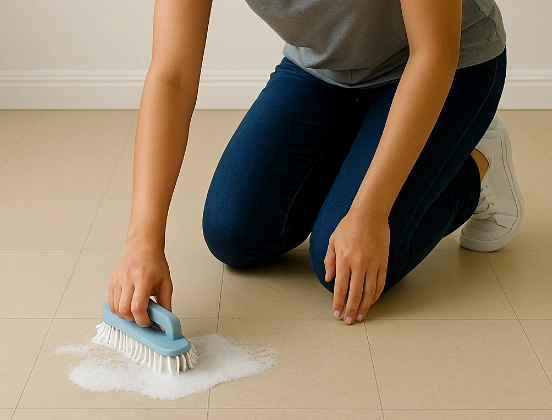
If necessary, the above practices can be done with a scrub brush to get a more thorough, rigorous cleaning. Stubborn stains can be removed using solutions like a cup of white vinegar with a gallon of warm water, or creating a paste of baking soda and water for specific stains.
How You Can Prevent Future Wear and Stains
It is not enough to only clean your linoleum floors. You should also take measures to prevent future wear and stains. Here’s how you can do this:
Regular Cleaning
Remove loose dirt and debris on a daily basis to prevent scratching and dulling of the floor’s surface. Damp mop with a mild and linoleum-friendly cleaner weekly to remove grime and sticky residue. Also, schedule periodic deep cleaning to prevent dirt buildup in corners and edges.
Read More: Difference between commercial and residential carpet cleaning
Spill Management
Take immediate action and clean up spills as soon as they occur to prevent staining. Use a clean cloth that can absorb dirt to wipe up spills, and follow up with a mild and not too harsh detergent if needed.
Protective Measures
Place mats at entryways and doors, and rugs in high-traffic areas to catch dirt and spills. Also, attach felt or rubber pads to furniture legs to prevent scratches and dents on the floor.
Right Cleaning Products
Use linoleum-friendly and mild cleaning solutions instead of harsh chemicals or abrasive cleaners. Avoid abrasives, as they can damage the linoleum’s surface.
Annual Maintenance
Consider applying an acrylic sealer to new linoleum floors and recoating annually to protect against stains and wear. Also, schedule professional floor cleaning and resealing every few years, especially if you notice peeling or loss of shine.
FAQs
1. Can you use bleach on old linoleum floors?
No, avoid bleach, as it can discolor and weaken old linoleum.
2. What is the best homemade cleaner for old linoleum?
A simple mix of warm water, a few drops of dish soap, and a splash of vinegar works well for everyday cleaning without damaging the surface.
3. How do you make old linoleum floors shine again?
After cleaning, you can restore shine by applying a thin layer of linoleum-safe floor polish or a homemade mix of vinegar and baby oil, then buffing with a soft mop or cloth.
4. How do you remove scuff marks from old linoleum?
Rub the mark with a soft cloth dipped in rubbing alcohol, or use a clean tennis ball to buff the scuff away gently.
5. Is it safe to steam clean old linoleum floors?
No, steam cleaning can damage old linoleum by loosening the adhesive and causing warping. Stick to gentle, low-moisture cleaning methods.
Conclusion
Keeping old linoleum floors clean is not only about appearance, but also about preserving your home’s history. With the right tools, gentle cleaners, and consistent care, you can remove years of dirt and bring back the shine of this classic flooring. By following these simple steps and performing regular maintenance, your old linoleum floors can stay in good condition.
Need more professional help to maintain your floors? Stay connected with us and never miss an update!